Wandering Walls Featured in Where Architects Stay Around the World
The Only Property from Taiwan Among 120 Architectural Stays Worldwide
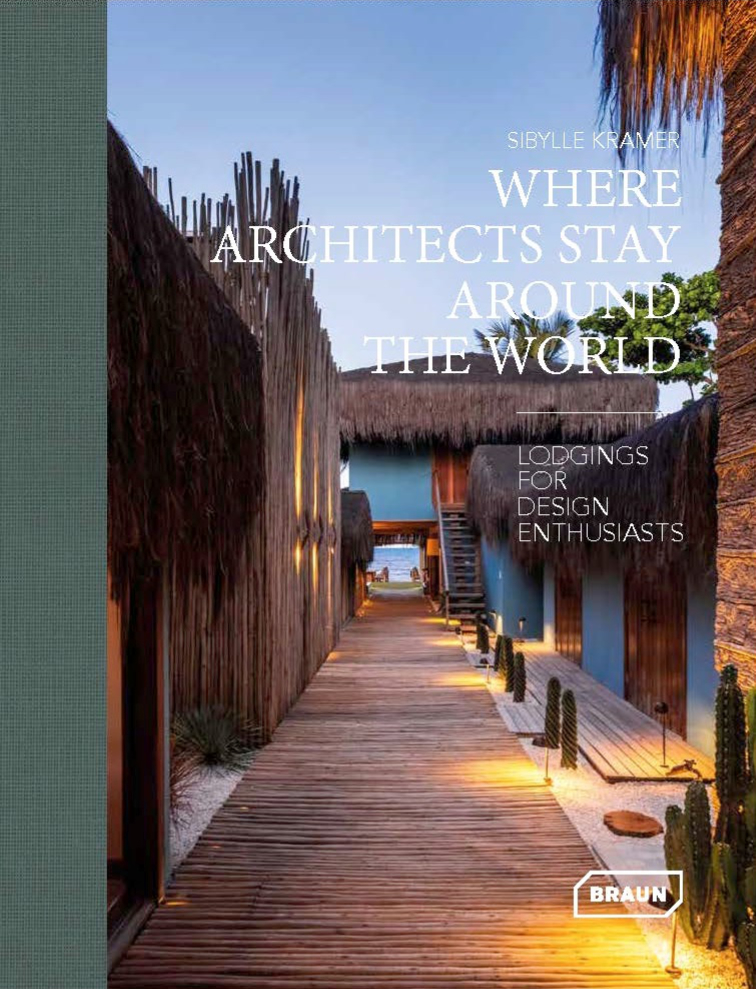
A travel book that begins with architecture—not star ratings or conventional notions of luxury—has recently arrived at Wandering Walls.
Published in 2026 by Swiss architecture and design publisher Braun Publishing and curated by architect Sibylle Kramer, Where Architects Stay Around the World spans 384 pages and approximately 700 images, presenting 120 architecturally distinctive places to stay around the world.
Among the 120 architectural stays featured in the book, Wandering Walls is the only project from Taiwan.
Not the Most Luxurious Hotels, but Architecture Worth Experiencing
Where Architects Stay Around the World is not a conventional hotel guide.
Its 120 selections vary widely in scale and form. They include international hotel brands, independent retreats, private holiday homes, and architecture set deep within forests, valleys, coastlines, and deserts.
What connects these 120 places is the relationship between architecture and travel.
In the book’s preface, Sibylle Kramer writes:
“Architecture becomes a mediator between people and landscape.”
Architecture frames views, filters light, provides shelter, and at the same time opens itself to its surroundings. Although these selected places are found across vastly different cultures and climates, they share an aspiration toward quality, character, and atmosphere.
Four Pages That Reframe Wandering Walls and Its Relationship with the Hengchun Peninsula
Wandering Walls is featured on pp. 28–31.
Rather than presenting Wandering Walls simply as a design retreat in Kenting, the book begins with the environmental conditions that shaped its architecture.
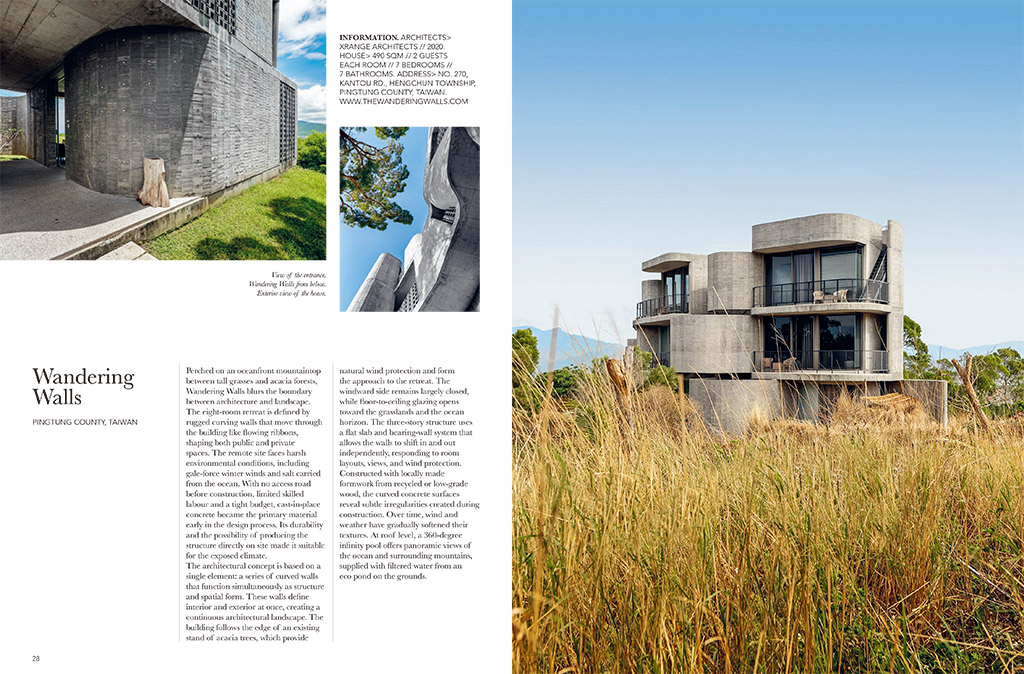
Set along a mountain ridge on the northwestern side of the Hengchun Peninsula, the building responds to strong seasonal winds, ocean salt, and an expansive landscape. Its three free-flowing, curved cast-in-place concrete walls are not merely sculptural gestures; they function simultaneously as structure and spatial form. The windward side remains comparatively enclosed, while expansive glazing on the opposite side opens toward the grasslands and the sea.
The building follows the edge of an existing native acacia grove, allowing the trees to become part of its protection from the strong winds. Cast-in-place concrete was chosen in response to the remote site, construction conditions, and the need for long-term durability.
Arrival Becomes Part of the Architectural Experience
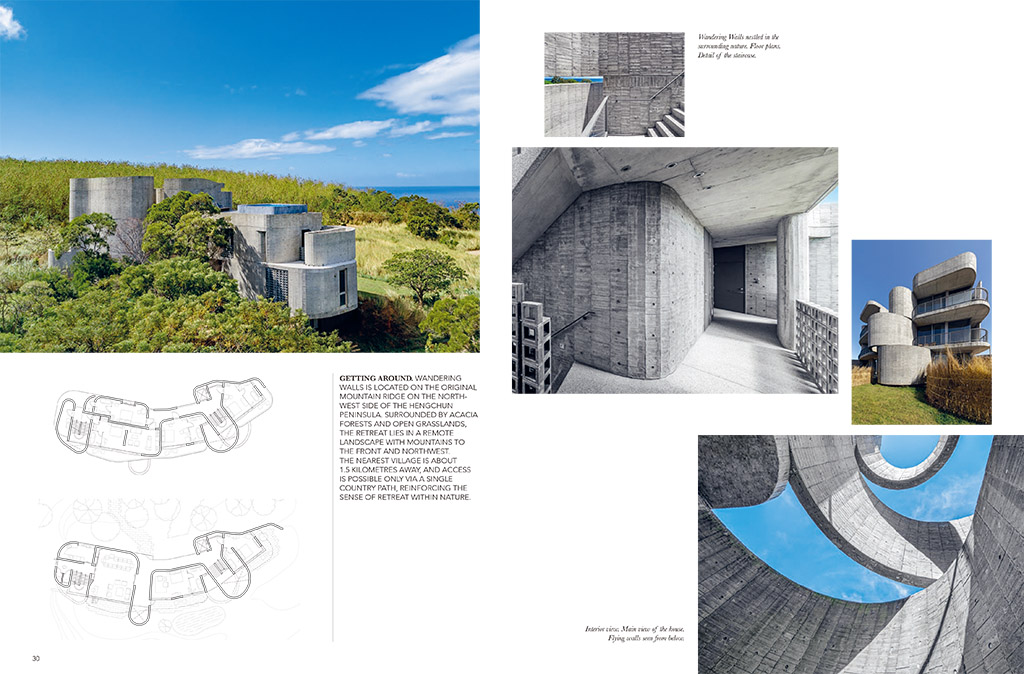
The book also draws particular attention to the experience of arriving at Wandering Walls.
Wandering Walls lies approximately 1.5 kilometres from the nearest village and can only be reached along a single country path. Rather than treating this as an inconvenience to be concealed, the book describes the approach as:
“reinforcing the sense of retreat within nature.”
This was one of the passages that resonated with us most deeply when reading the book’s feature on Wandering Walls.
A Single Coordinate in Taiwan on the World Map
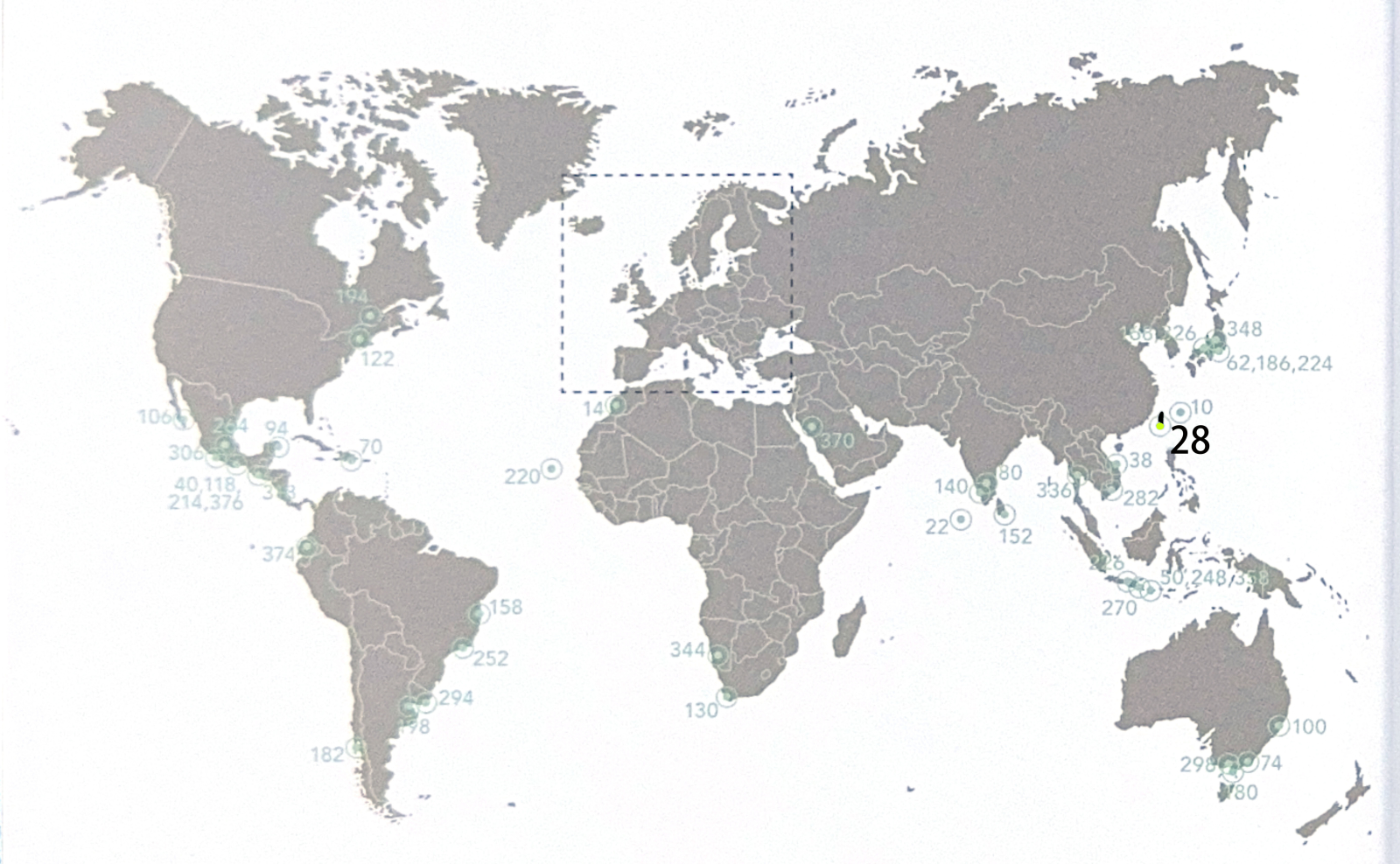
Turn to the world map on p. 380, and the 120 architectural stays become coordinates scattered across Europe, the Americas, Asia, Africa, and Oceania.
Japan has several coordinates, while Europe is particularly densely marked. On Taiwan, however, there is only one: 28.
It points to:
Wandering Walls
Pingtung County, Taiwan
XRANGE Architects
Since opening in 2019, Wandering Walls has spent seven years on this hillside, exposed to seasonal winds, intense sunlight, long rainy seasons, and salt carried inland from the sea.
What we see every day is a work of architecture that must be inhabited, maintained, repaired, and allowed to change with time.
Now, Wandering Walls has once again been placed on the world map—this time as a work of architecture considered worthy of travelling to, staying in, and experiencing from within.
For us, perhaps this is what makes its inclusion in the book most meaningful.
Some journeys begin with a city.
Some begin with a landscape.
And sometimes, the destination itself is a work of architecture.
Book Information
Where Architects Stay Around the World
Author / Editor: Sibylle Kramer
Publisher: Braun Publishing
Year: 2026
Pages: 384
Images: Approx. 700
ISBN: 978-3-03768-312-5
Wandering Walls: pp. 28–31
Architecture: XRANGE Architects